
Daily, Weekly, Monthly Limits: How Withdrawal Caps Impact High Rollers

A withdrawal cap operates as three stacked layers. The daily limit is the tightest, the weekly limit is looser, and the monthly limit sits at the top. Casual players rarely notice the cap stack. High rollers attempting to move a large win encounter all three limits at once. Someone cashing out a few hundred barely notices. Someone trying to move a five-figure win out of a standard-tier account runs into the daily ceiling on the first request, then watches the weekly and monthly limits close in behind it. The stack exists because of compliance rules and payment processor risk, and high-value players can move it through three specific levers.
What the cap stack actually looks like
Most regulated operators publish three withdrawal limits, keyed to three time windows. A withdrawal must clear all of them in sequence. The daily ceiling is the tightest. The weekly ceiling is higher than the daily ceiling yet still finite. The monthly ceiling sits at the top, and it’s usually the one that ends the conversation for a player trying to move a large balance in a single month.
The tiers themselves split by account type. A standard, non-VIP account sits on the lowest rung, commonly somewhere in the low thousands per day. The exact figure shifts by operator, payment processor, and jurisdiction. Higher-value accounts move up through progressively higher tiers, but this shift requires a formal request and review process.
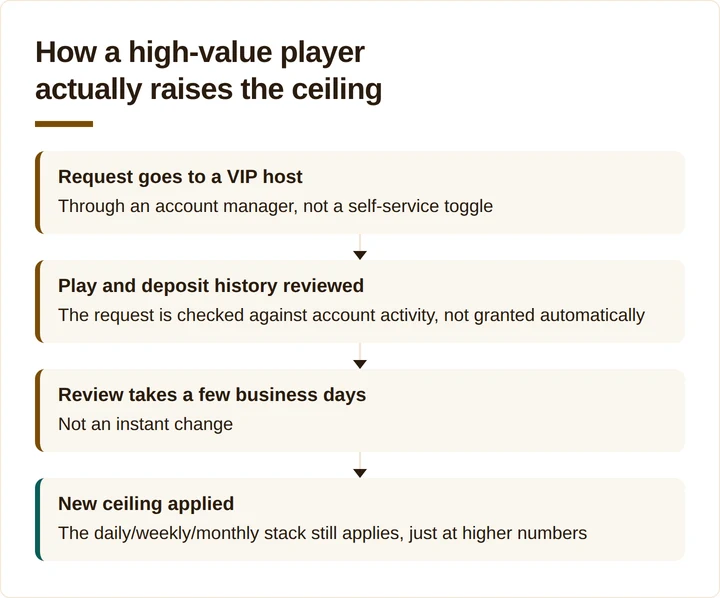
Higher ceilings require a formal request and do not occur automatically. A player who deposits and plays at high volume must explicitly request a raised ceiling; automatic increases do not happen. The higher tier is requested, then reviewed, through a VIP host or account manager, typically against play history and deposit history, before it’s applied. A standard-tier account with a daily ceiling in the low thousands illustrates the stack well. Imagine a $40,000 win on that account. The first request can only move a small slice because the daily ceiling is the tightest; subsequent requests may run into the weekly cap; and a total large enough to stretch across the month can eventually meet the monthly cap. The exact point at which each tier binds depends on the operator, the rail, and the account’s tier, so treat this as illustrative of the structure; verify the specific thresholds with your operator. The stack rarely fails all at once. It tends to fail in layers.
Trying to move the money too fast can drain one window before it resets. A slower, steadier cadence can keep more of the stack available, though the exact spacing depends on the operator’s daily and weekly ceilings.
Why the ceilings exist in the first place
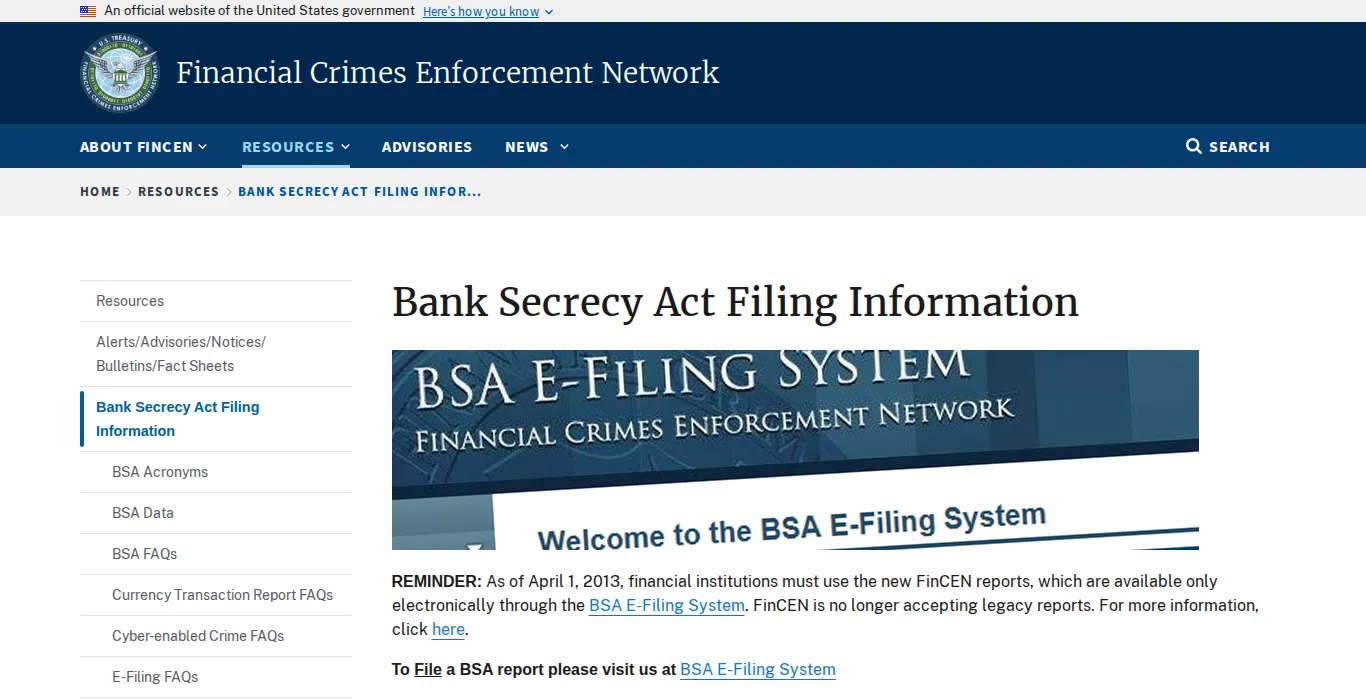
Withdrawal ceilings serve a compliance function. Regulated financial and gaming operators have to monitor and report unusually large transactions to prevent money laundering. In the US, the Bank Secrecy Act sets $10,000 as the standard threshold at which a currency transaction report is required. Those reporting and monitoring obligations are one of the reasons operators impose withdrawal ceilings at all.
Chargeback and dispute risk shape the rail-specific side of the ceiling. Card-funded withdrawals carry chargeback/dispute exposure for the operator, which is one structural reason card rails tend to sit on a lower ceiling than bank transfer or crypto rails. The ceiling is set by the payment rail’s structural characteristics. Card transactions are reversible through the card network, so the operator carries exposure on card-funded cashouts. Crypto transactions are irreversible once confirmed, which removes chargeback risk; that is part of why crypto withdrawal ceilings are often higher, or effectively uncapped. Bank transfer sits above card on this measure, but the evidence here doesn’t say where it lands relative to crypto.
Where the ceiling comes from by payment rail
The ceiling depends on both the account type and the payment rail. Card and crypto anchor the two ends consistently across operators; bank transfer’s position relative to crypto isn’t established by the same evidence.
| Payment Method | Ceiling Position | Why |
|---|---|---|
| Card | Lowest | Reversible through card network; operator carries chargeback/dispute exposure on card-funded cashouts |
| Bank Transfer | Above card | Doesn’t carry the card-network chargeback mechanism, so it isn’t pinned to card’s lower ceiling; position relative to crypto not established here. |
| Crypto | Highest/Uncapped | Irreversible once confirmed; no chargeback mechanism; operator exposure from reversibility is near zero |
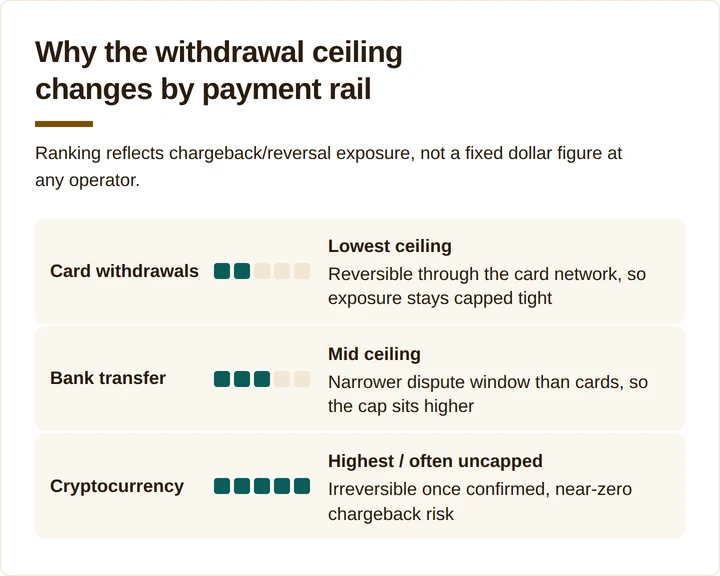
A card withdrawal can be reversed if the player disputes it through the card network, which means the operator carries risk on every card-funded cashout. Bank transfers do not carry the same card-network chargeback mechanism, so the card-specific exposure is lower. Crypto transactions are irreversible once confirmed, with no chargeback mechanism, so the operator’s exposure from reversibility drops to near zero. A large withdrawal that would hit a lower card ceiling can have a higher ceiling on crypto, because the chargeback mechanism no longer creates exposure for the operator.
This frames the cap as determined by the rail, independent of judgments about the player. The same account, the same balance, the same win, different ceiling depending on which pipe the money uses.
For a reader deciding how to handle a large win, the payment method shapes the planning. A player who requests a large cashout on a card rail is choosing the rail with the lowest ceiling and the highest chargeback exposure, which means the request is more likely to run into a cap. The same player requesting the same amount over a bank transfer or a crypto rail is working with a higher ceiling, and on crypto, the absence of chargeback risk can remove one structural reason for the cap in the first place. The ceiling a player runs into is partly a consequence of a decision they made earlier, when they chose how the money would come back. A player who knows a large win is possible can decide the rail before the win occurs, and that single choice can move the ceiling more than any request submitted later.
What a high-value player actually does about it
Three practical moves come up again and again, and none of them require special access.
1. Stagger the cashout. Splitting a large withdrawal into several smaller requests spread across days is the most common workaround. A $40,000 win broken into daily-sized requests clears the stack incrementally across multiple withdrawal windows. Space the requests so each one lands in a fresh daily window and the weekly allowance isn’t drained early. The exact spacing depends on the operator’s caps, so the practical goal is to avoid exhausting the weekly tier before the full amount has been requested. This approach takes longer than a single request, yet it can succeed when larger single requests fail.
2. Request a higher personal ceiling. Most operators with a VIP program have a process for a player to formally request a raised withdrawal limit. It typically requires account history and verification, and takes a few business days to review. The request goes through a host or account manager, and the outcome depends on the play and deposit record behind it. This is the only approach that changes the ceiling itself. Completing verification and having a documented deposit record are part of the process the operator reviews.
3. Time the cashout around the monthly reset. Monthly ceilings typically reset on a fixed cycle, most often the calendar month. A player who tracks that reset date can plan a large cashout to land right after the ceiling clears, when the monthly limit is at its highest. A fresh monthly ceiling is always larger than a depleted one. This tactic works best when paired with the stagger approach. A reset clears the monthly window, while staggering handles the daily tier constraints.
The bottom line
The cap is a byproduct of AML reporting rules and chargeback exposure—two requirements most players never encounter because most players never move enough money to hit the ceiling in the first place. The stack only becomes visible when a win gets large enough to run into it, and by then the daily, weekly, and monthly tiers are all in play at once.
Understanding this before a large win arrives matters. The ceiling is a function of the rail and the account tier—it can shift through the three levers of staggering, requesting a higher limit, and timing the reset.
FAQ
Is a withdrawal cap the same thing as a withdrawal fee? These are distinct mechanisms. A cap is a ceiling on how much can be moved out in a given window. A fee is a charge applied to the withdrawal itself. A player can hit a cap without paying any fee at all. Conversely, a fee can apply to any withdrawal, regardless of whether the cap is involved. The two sit on the same terms page but function independently. A question about costs versus amounts falls into two separate topics.
How does a player actually request a higher withdrawal ceiling? Through the operator’s VIP program or account manager. It’s a formal request that the operator reviews against play history and deposit history before approval. The review process takes a few business days to complete. The higher tier is not granted automatically to high-volume players; it requires an explicit request. A player who never submits a request remains on the standard ceiling indefinitely.
Why is the crypto ceiling higher than the card ceiling? Because crypto transactions are irreversible once confirmed. There’s no chargeback mechanism on a settled blockchain transaction, so the operator carries almost no reversal risk on a crypto withdrawal. Card withdrawals can be disputed through the card network, which is why card rails sit on a lower ceiling. The ceiling reflects the operator’s exposure based on the payment mechanism.
Do monthly caps reset on a fixed date? They typically reset on a fixed cycle, most often the calendar month, though the exact reset point varies by operator. A player who knows the reset date can plan a large cashout to land right after it clears rather than hitting a limit that’s already partly spent mid-month.
Does a higher VIP tier remove the ceiling entirely? Rarely. A higher tier raises the ceiling, sometimes substantially, but the daily, weekly, and monthly stack usually still applies, just at higher numbers. Crypto rails are the closest thing to an uncapped withdrawal because the chargeback risk that shapes card and bank ceilings is absent. The stack gets taller. It rarely disappears.
What’s the difference between a high roller tier and a standard account’s implicit ceiling? A standard account’s ceiling comes from the operator’s default tier settings. The player has no individual input into where this ceiling sits. A high roller tier is created through a formal request and review process. The operator assesses each account’s history and may set different ceilings for different players on the same nominal VIP tier. This means two players at “VIP tier 1” can have different actual limits based on their individual records. A standard account can also clear a large win by staggering requests across multiple days to fit within the default daily, weekly, and monthly allowances. Both raising the ceiling through a VIP request and staggering within existing limits are viable approaches.
Foundation Check
Three things to confirm for yourself, in the platform's own documents, before you act on anything above. This is a checklist, not a score.
- Find the daily, weekly and monthly caps in the terms, and check whether they are per account or per payment method.
- Work out how long a win larger than the cap would take to pay out in full at that rate.
- Check whether the caps change with account tier or loyalty level, and what it takes to move between tiers.